Friendship, girlhood, and misogyny: UTSC Drama Society presents Girls Like That
★★★★☆ – The UTSC Drama Society’s production of Girls Like That, written by Evan Placey and directed by Jannat Narang, was performed in the Leigha Lee Browne Theatre from Nov 21 to 23.
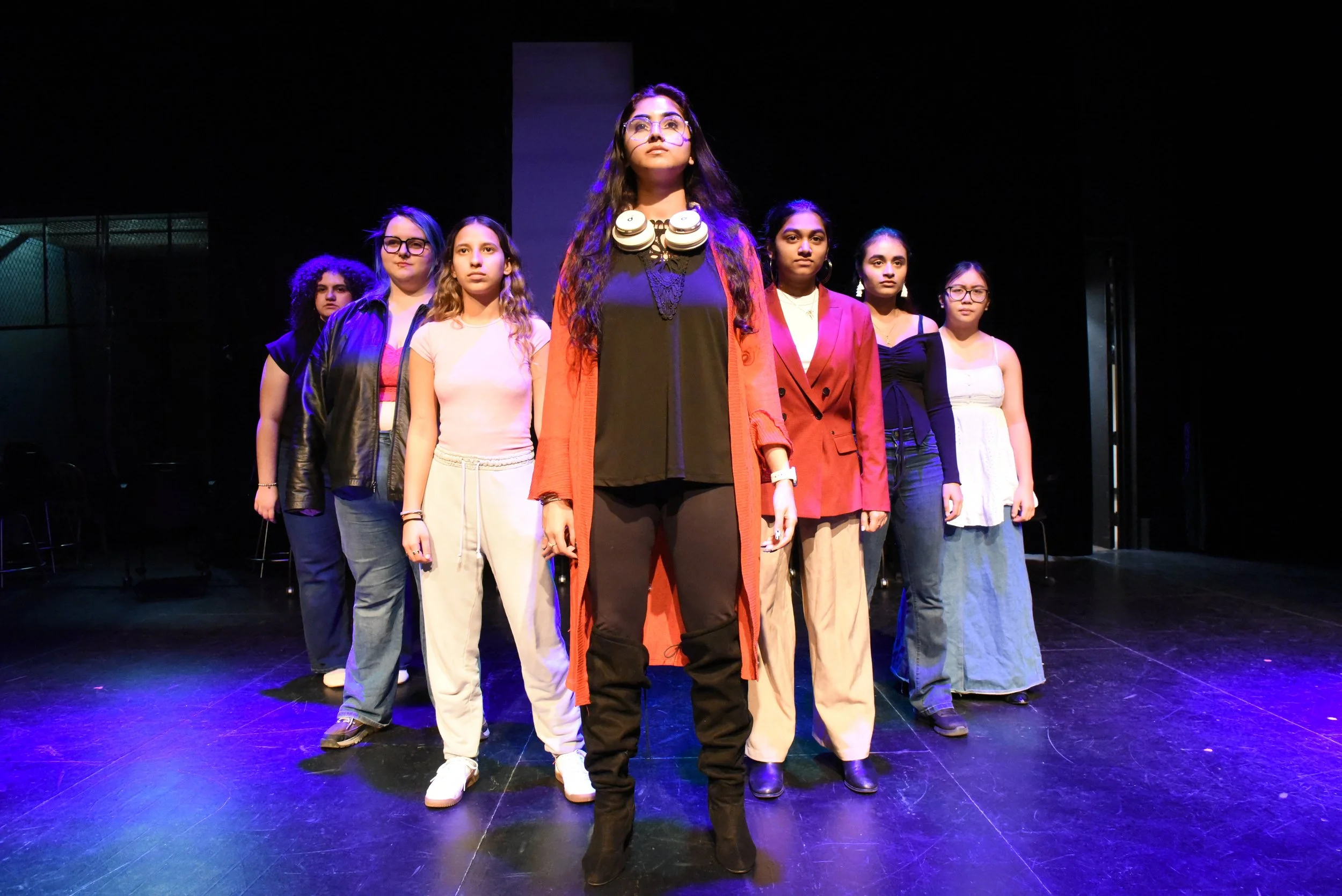
Girls Like That was performed at the Leigha Lee Browne Theatre at UTSC. Jannat Narang directed the performance. (Photo Credits: Adam Lam // The Underground)
It is opening night for the UTSC Drama Society production of Evan Placey’s Girls Like That, and the Leigha Lee Browne Theatre hosts a small audience, lending the space an intimate atmosphere. The lights go down, and one by one, each actress in the six-person ensemble marches to the front of the stage to shout a word: “Slut! Skank! Whore!”
Perhaps an off putting way to open the play but “it definitely catches your attention right away,” said audience member Keira Westwood. Indeed, Girls Like That quickly and surely pulls you into the story, where you remain invested until the end.
The story revolves around twenty girls who together attended the St. Helen’s school. When an explicit photo is leaked of Scarlett, a St. Helen’s girl, whispers and judgements circulate. For the other girls, dealing with the aftermath is complicated. Through this main storyline, flashbacks, and historical episodes, Girls Like That investigates cyberbullying, beauty standards, and girlhood.
In the main storyline, the St. Helen’s girls choose to reject one of their own. As the girls go from bystanders to bullies, one thing becomes clear—these girls are mean. At one point, they each leave mocking voicemails for Scarlett pretending to be representatives from playboy-like magazines.
Interestingly, their cruelty always starts innocently. The reason they call Scarlett in the first place is to check on her. This is what the girls tell us, and we believe them. When they seem to spontaneously turn mean, you feel duped, like they’re making fun of you too. Yet this cruelty is neither random nor cryptic. There are pressures acting on the girls, like external and internalized misogyny, and social conformity.
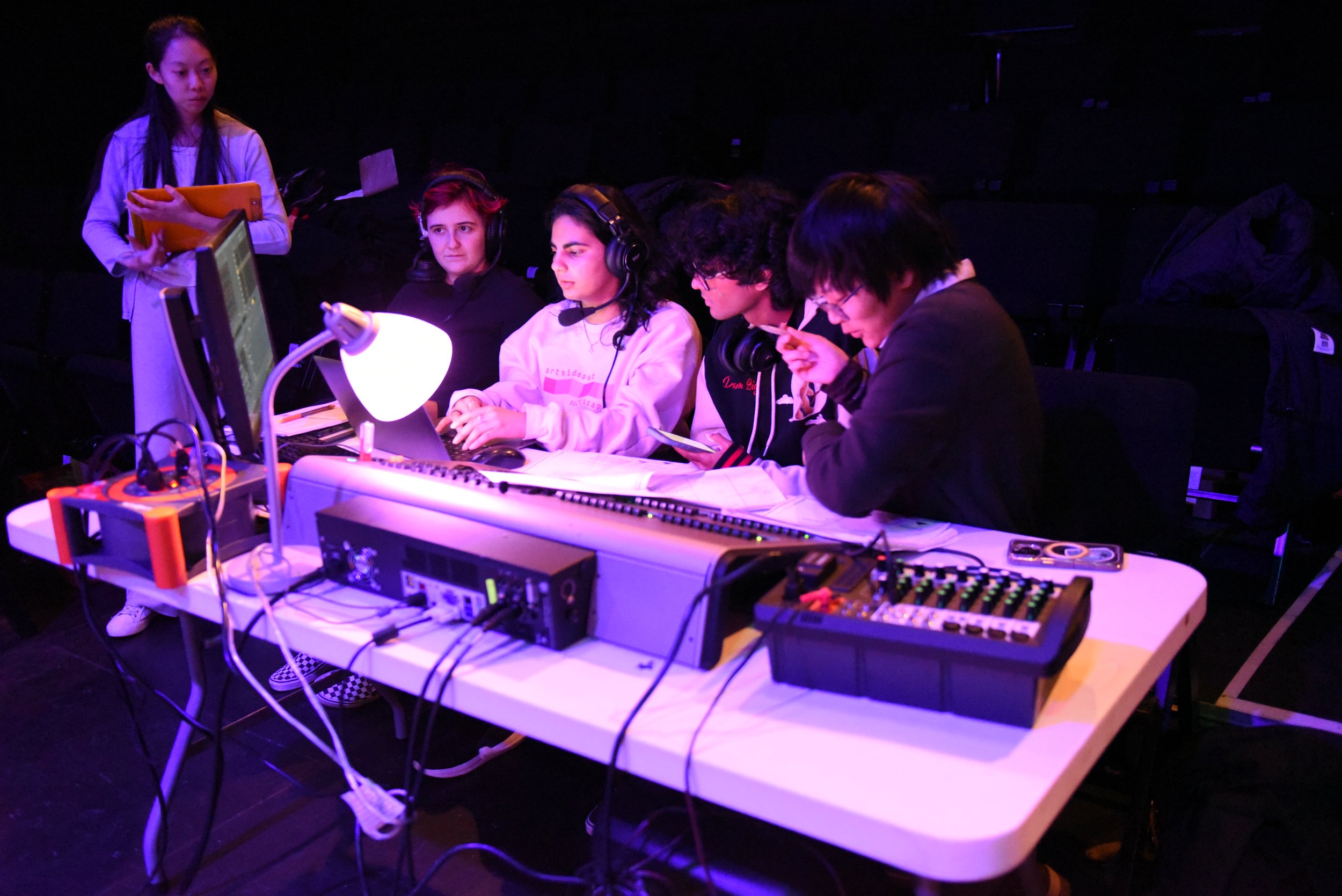
The play included a team dedicated to stage management, lighting and audio to ensure the experience was an immersive one for the audience (Photo Credits: Adam Lam // The Underground).
If the main storyline explains why things are the way they are, then the flashbacks and historical scenes delve into the question of how did we get here?
The scenes of the girls as children show brighter moments of girlhood. As eight-year-olds, the actresses freewheel across the stage, taking over the space with a wildness and carefreeness unique to children. They end up lying down with one girl’s head on the other’s belly, connected to each other at that moment.
Where does this carefree girlhood go?
When is propriety forced on us?
With every scene from the girls’ past, we see the slow and treacherous encroachment of misogyny on their lives. “You kind of do see this childhood innocence kind of fade away as the play goes on,” said Westwood. “They’re no longer just friends who don’t really have cares in the world and their biggest fight is over Barbies.”
Meanwhile, the historical scenes look at the journey to contemporary girlhood and feminism. The scenes depict moments of sexism and resistance, showing a hopeful progression of women’s rights. The 1920s scene, specifically, is wonderfully acted by student Penélope Rubio Alvarez. The only person on the stage, she flits from one end to the other, flirting with imaginary waiters in a way that lets you easily picture it.
“Penélope and Ayaa's monologue stood out so much to me because of how passionate their performances were,” said Eva Tan, another audience member. “Their ability to control kind of their voices, and their movement…really engaged me more to their story.”
Their performances are just one example of the impeccable acting delivered by the cast. As Tan put it, “The ensemble is amazing.”
While the flashbacks, historical vignettes, and modern storyline work well to consider and complicate ideas of girlhood and friendship, there are weak moments in the play such as heavy-handed lines or dance scenes that are fun but transition with difficulty.
Nonetheless, the student-run production is impressive, with the UTSC Drama Society managing to put it together with only five weeks of preparation.
“There’s a lot of responsibility on you, on the director, on every member of the crew, the cast, and I think all of us took that responsibility head on,” said cast member Sharanya Verman. “In the process, we did have a lot of logistical problems. But I do think all of us were so passionate about putting this play on…that we did push through…to put on a good show.”
There was also the emotional challenge of working on a play with serious themes. “There are so many difficult themes that are touched on…so I know a lot of us did have a hard time reading through [it]…and realizing how heavy and horrible the story is for Scarlett,” explained Verman.
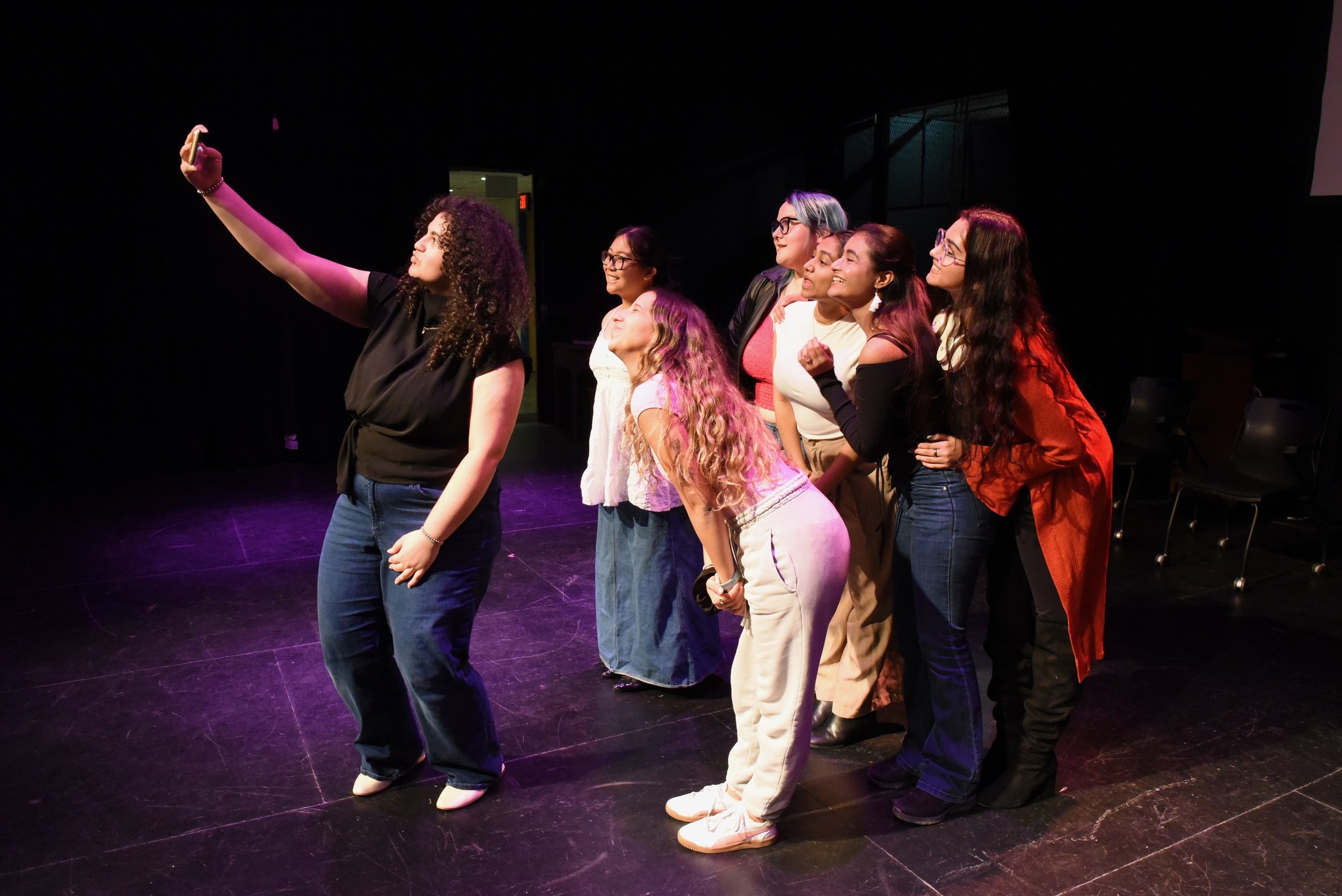
Girls Like That thoughtfully uses lighting to build mood and support the performance. Different colours and intensities of light were used throughout the performance. (Photo Credits: Adam Lam // The Underground)
Thankfully, there was a real camaraderie behind the scenes that made the production possible despite any setbacks, as Verman says, “We had so much trust in each other, the crew as well as the cast.”
“Plays like this are so relevant—it gets the audience talking, it makes an impact, it means something,” said Verman. The friendships and actions of the girls are not easy to watch, but even if it’s not “the most positive portrayal of womanhood…it is accurate enough to be talked about, because I think a lot of us can say we’ve experienced something like this.”
Even if you’ve never experienced the things in Girls Like That, you’re still able to get something out of it. “Everyone can interpret it completely differently based on their experiences…and that’s what’s beautiful about [it],” said Verman.