Queer and incognito at UTSC
Two students share how visibility, safety, and connection shape queer life at University of Toronto Scarborough (UTSC).
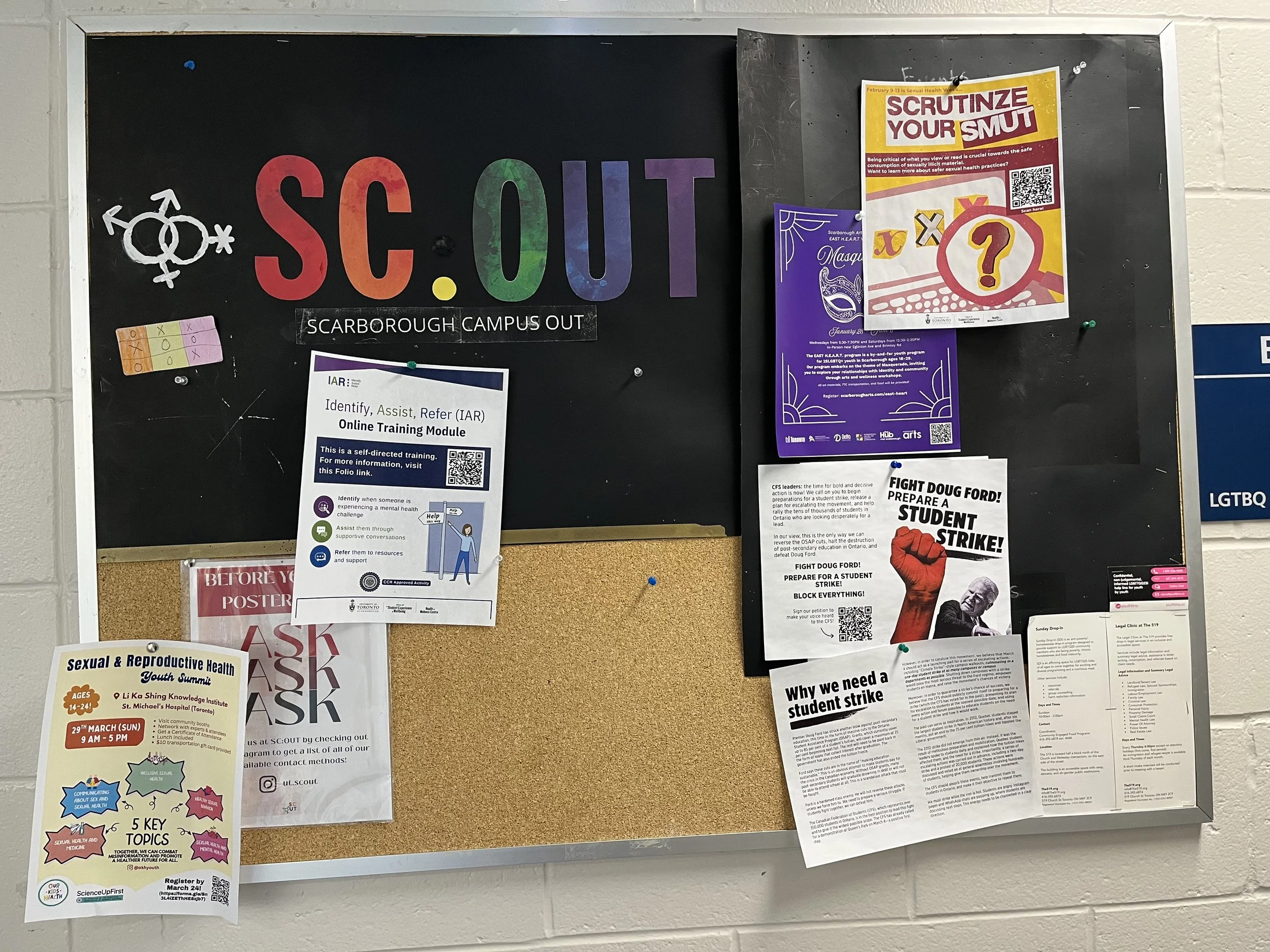
Bulletin board outside student-run queer space by Scarborough Campus OUT (SC:OUT) on campus (Photo By: Vyusti Shroff // The Underground).
The sources in this story were granted anonymity due to privacy concerns and are identified by their pseudonyms, Eli and Sky.
Campus life often follows a familiar pattern at the University of Toronto Scarborough (UTSC). Attend lectures, finish labs, and head home. As a commuter campus, the rhythm of daily life can make it difficult for students to build connections outside the classroom.
For queer students, those challenges can feel even more complicated.
Eli, a second-year double major in molecular biology and population health, describes their experiences navigating queer identity on campus as relatively quiet and personal.
“I haven't really actively reached out or anything or I guess like kind of paraded that I am queer around the campus,” they said. “It's just kind of like a background thing that exists.”
Eli identifies as non-binary and bisexual. They feel generally safe on campus but they add that being “out” tends to happen within trusted circles rather than publicly.
“I've told my friends that I'm queer and ask them to use my pronouns and whatnot,” they said.
“But I feel like because it's not a like you can see it type of thing I haven't really I guess expressed it much or experienced much of anything in regards to how I identify.”
The sense of queerness existing quietly or “incognito,” as Eli describes it, can shape how visible the community feels day to day.
“I feel like at least there isn't really much of a queer presence outside of any queer-centric events on campus,” they said. “Like we're all kind of incognito, you know?”
Sky, another second-year student studying biochemistry and population health, shared a similar perspective. Although they identify as queer, they have only come out to a small number of people at UTSC.
“I don't know, I just haven't been comfortable,” Sky said.
While Sky describes the campus community as generally friendly, personal factors still shape how and when they share their identity.
“A majority of the people on campus are friendly. But I think it's just something that I want to keep personal to myself.” Despite these concerns, both students emphasized that they have not personally experienced hostility on campus.
“I feel generally comfortable around being just a queer person existing in this space, I don't feel threatened,” said Eli.
Still, comfort does not always translate into visibility or connection.
Finding each other
One challenge both students pointed to is the difficulty of meeting other queer students. Unlike identity groups that might have clear markers or visible communities, queerness often requires self-disclosure.
“For me, the struggle is always like, I don't know who's queer and who's not queer,” said Sky. “I meet people as they come.”
Eli echoed this sentiment, explaining that they do not actively seek out queer friendships or relationships.
“I don't actively look out for people who are queer to be friends with,” they said. “If they're queer oh cool you and me like we're in the same group of people so that's great, that's a coincidence, wonderful with something that's shared.”
The structure of UTSC itself can also make meeting people more difficult. As a commuter heavy campus, many students leave shortly after classes end.
“Even in the context of non-queer relationships and whatnot, sometimes I'll not see my friends for a week or two because we all finish our classes and we all go home,” Eli said.
Spaces for queer community, or lack thereof?
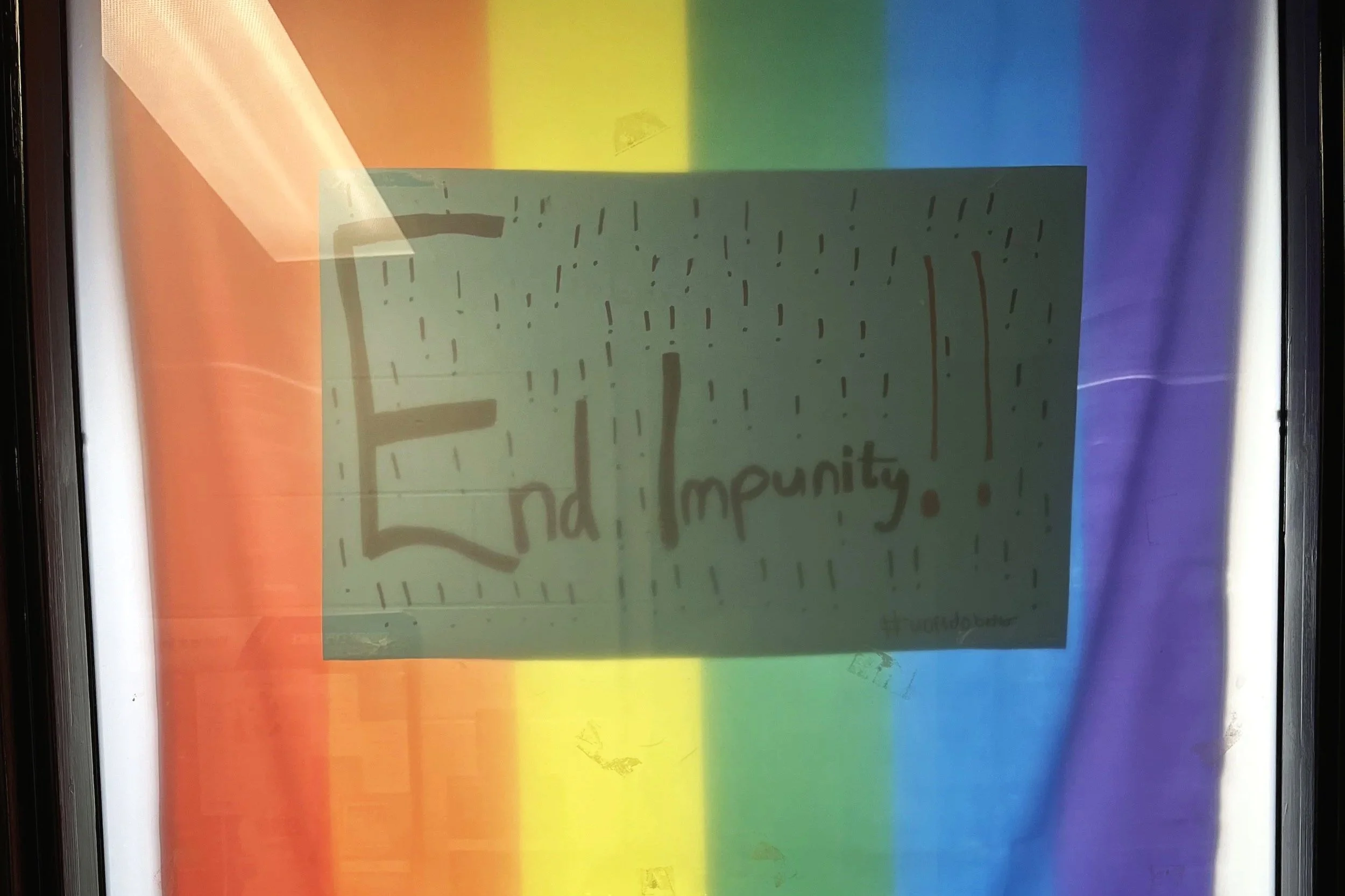
Pride flag at the entrance of SC:OUT office in BV building. The student-run group has office hours Monday, Wednesday and Friday from 11 a.m. to 6 p.m. (Photo By: Vyusti Shroff // The Underground).
While both students acknowledged that there are some spaces for queer students, they said those opportunities can be limited or difficult to discover.
Sky recalled attending a queer-friendly trivia event early in the semester and meeting a few queer students there. Outside of that event, however, they had not met many others.
Eli noted that many queer focused initiatives on campus come from student organizations rather than the university itself.
“There isn't really any pride centred events or queer centred events that aren't hosted by a specifically queer club organization on campus,” they said. “So the university itself I feel isn't doing much but the clubs are.”
Student-run groups such as the UTSC Women’s & Trans Centre (WTC), the UTSC Drag Club, and Scarborough Campus OUT (SC:OUT) provide some spaces for queer students to connect.
“Other than Scout, I don't think there's any student-run, queer-centric club on campus,” said Eli.
Eli said campus resources can sometimes feel difficult to identify.
“In regards to campus resources, the fact that I can't think of one right now on the top of my head is a little concerning.”
“There's the Health and Wellness Centre, there's counseling, and we all claim to be welcoming of everybody, but we don't talk about it much…we don't really do anything to celebrate it, I think that's kind of odd,” said Eli.