Bits and pieces: What roommates leave behind
Identity formation through cohabitation often happens invisibly. A playlist you start working on without thinking, a joke you hear yourself repeating, a way of winding down that once belonged to someone else, these pieces slip in long before you notice.
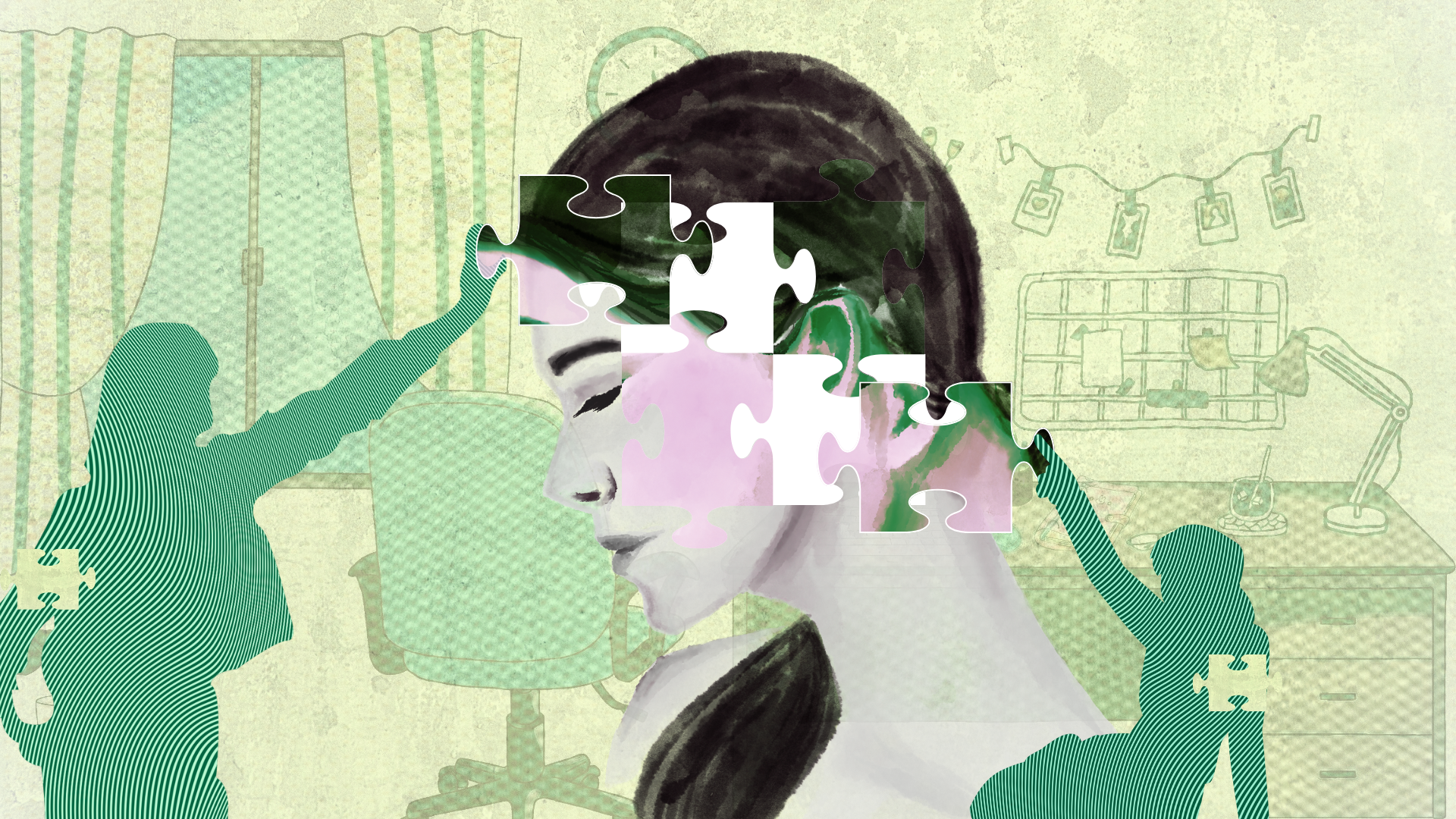
Over three years, I’ve started to think of cohabitation as annotation. Each roommate leaves a piece behind. (Illustration By: Akshita Rajpal // The Underground)
There’s a strange intimacy in recognizing someone by the sound of their toothbrush at 2 a.m. or the floorboard that creaks under their weight. That’s what living with roommates felt like: becoming fluent in someone else's rhythms and discovering your own negotiable boundaries.
At UTSC, strangers became people I shared closets, jokes and a wordless language of eye contact with, each leaving behind more than hair ties and half-used shampoo but also little pieces of themselves that I’m still made of.
Becoming Bits and Pieces
In my first year, I unpacked into a room that didn't know me yet. Neutral walls, standard furniture, a stranger's suitcase. By the end, my roommate and I shared habits neither of us could claim, and the room felt like a third person we'd built together.
Identity formation through cohabitation often happens invisibly. A playlist you start working on without thinking, a joke you hear yourself repeating, a way of winding down that once belonged to someone else, these pieces slip in long before you notice.
Fourth-year Community Advisor Riya Osti put it simply, “You really are bits and pieces of the people that you live with.” As an international student, her roommates became a “home away from home” teaching her how to navigate banking, campus and life here. What stays with her now are “little pieces of confidence and calm” picked up from the people she shared space with.
Samyak Jain, a third-year student at UTSC, lived the same pattern with his first-year roommate, a shy and quiet international student from South Korea. At first, he was “very careful” not to disturb him.
Taking the step to merely share snacks late at night shifted that distance. “That first step of being open, casual and willing to share makes all the difference,” he asserts that this transformation requires vulnerability, "the more open you are, the more it opens them up to being caring and kind in return," said Jain.
When Needs Collide
Not every influence fits neatly. The friction in roommate relationships rarely announces itself. It builds slowly, often accompanied by feelings of neglect.
Residence Advisor Claire Stobo has lived in both shared and single spaces. For her, the worst situations weren’t about clashing personalities but about invisibility. “When I felt like I was having a bad situation in residence,” she explains, “it was because I felt like my needs weren’t being seen or considered.”
Many first-years assume roommates should become built-in best friends, which can make normal tension feel like failure. Claire has watched students struggle until they realize that, “Sometimes it is about learning to live with a person, not necessarily being best friends.”
UTSC's Residence Life aims to facilitate this by encouraging early agreements among housemates on noise, cleanliness, and schedules. These conversations establish a baseline, something concrete to reference when the inevitable friction arrives.
Learning to Let Go
Living with friends complicates things. When boundaries blur, you can slip into parenting housemates and monitoring messes. Jain learned this the hard way, constantly policing dishes and counters until, as he put it, “I realized that it felt better when I stopped treating it as my responsibility to tell people how to live. As long as I could maintain my own space.”
For Osti, the lesson looked like becoming confrontational in a healthy way, seeing clear, low-stakes check-ins about noise, chores, or guests as care rather than aggression, and practicing healthier communication.
During a conflict, “We always recommend they first try to have a conversation themselves, because gaining that skill of talking to people and resolving conflicts on your own is important once you move out of residence,” Stobo emphasizes. When direct conversation fails or feels unsafe, she notes that UTSC's Residence Advisors offer mediation, creating bridges for students who are too overwhelmed to communicate. The support escalates as needed, from RA conversations to room changes.
Building relationships outside the domestic space helps, too. Shared experiences beyond the room remind you that your roommate is a whole person, not just an obstacle to your ideal living environment.
What We Carry Forward
Over three years, I’ve started to think of cohabitation as annotation. Each roommate leaves a mark, a phrase I still use, a way of stacking dishes, a sharper sense of where my boundaries actually are.
We like to imagine identity as something built alone in dramatic moments, but living alongside other people suggests being pieced together from tiny negotiations about doors left open, music volume, and whose dishes sit in the sink. The version of me who walks across campus now isn’t just the sum of my own choices; I’m a mosaic of borrowed habits and hard-won limits, shaped by everyone I’ve quietly learned to live beside.