Sustainability through photographs: Inside the UTSC Eco-lens Exhibition
An artistic curation of photography pieces by UTSC students reflecting on sustainability and the challenges hidden within our spaces.
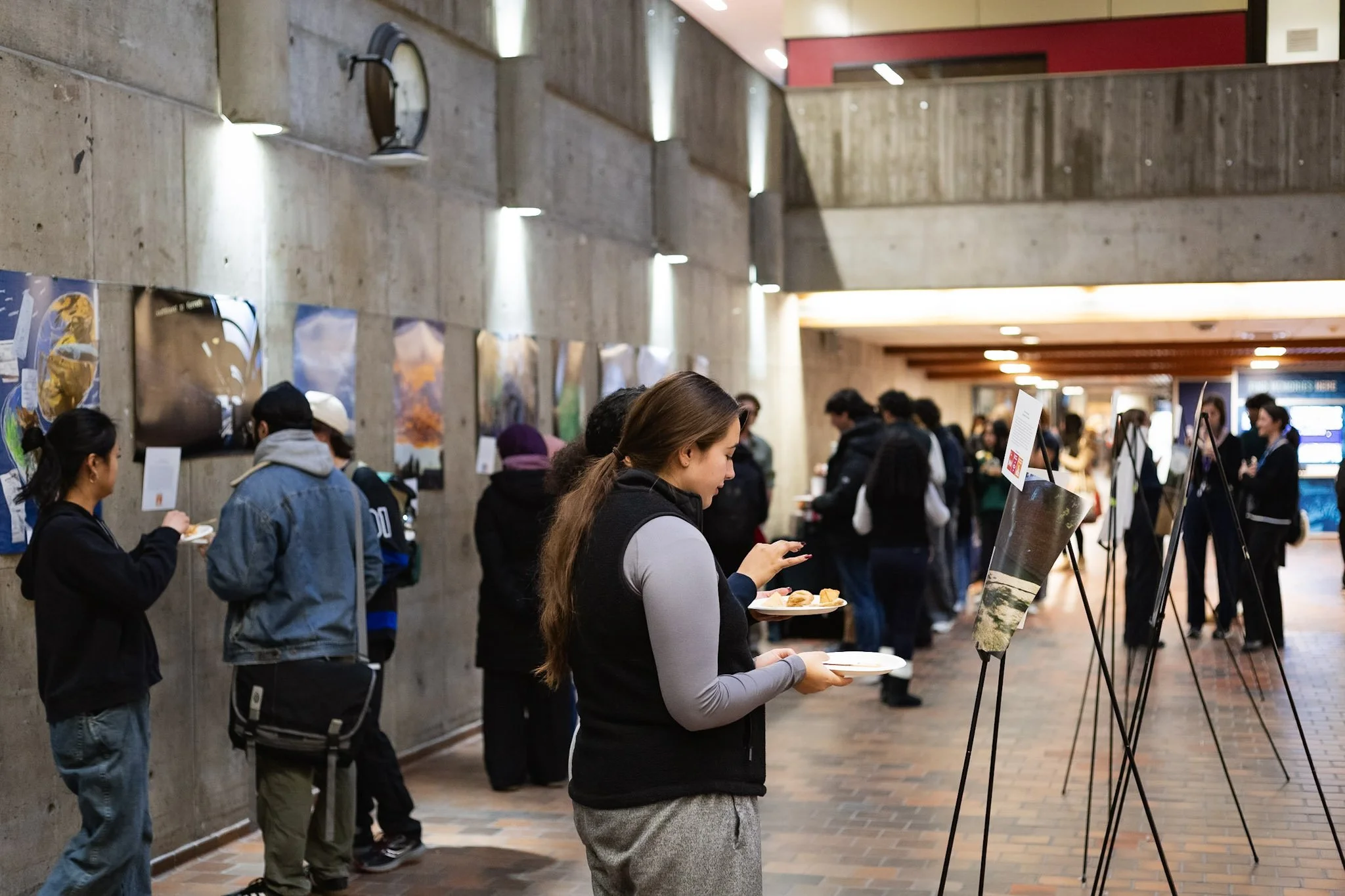
Students viewing the art submitted to Eco-lens Exhibition at the Meeting Place in UTSC. (Photo credits: Neil Patel)
As I walked into the meeting place for the Eco-lens event, the setup reminded me of my long hours spent in museums, looking for tales hidden. I immediately felt connected to the art on display, there were stories to be told. Art is one of the most honest ways to tell stories of the world and the Ecolens Exhibition allowed for just that.
The Eco-lens Exhibition — a student photography showcase took place on Monday, Nov. 7 at the Meeting Place. Organized by the President’s Advisory Committee on Environment, Climate Change and Sustainability (CECCS), the Institute for Inclusive Economies and Sustainable Livelihoods (IIESL), The UTSC Sustainability Office, Office of the Vice-Principal Research and Innovation (OVPRI) and the Geography and City Studies Student Association (GCSA), this event invited submissions from UTSC students across all disciplines.
Participants were required to submit a photo or art work that reflects environmental, political, and socioeconomic challenges in our communities. Each submission also required a 200-250 word student reflection on the photo, encouraging students to narrate the story behind their piece, connecting it to one or more United Nations Sustainable Development Goals (SDGs).
In an interview with the co-president of GCSA Riya Osti, she discussed why it was important for her to curate this event. She says it was about opening up a new world to students to find a way to express their ideas and beliefs, and visual storytelling seemed fitting.
“My colleagues and I are typically found writing about sustainability in a very academic manner…very rarely do students get to express their interest through creativity like photography,” Osti said.
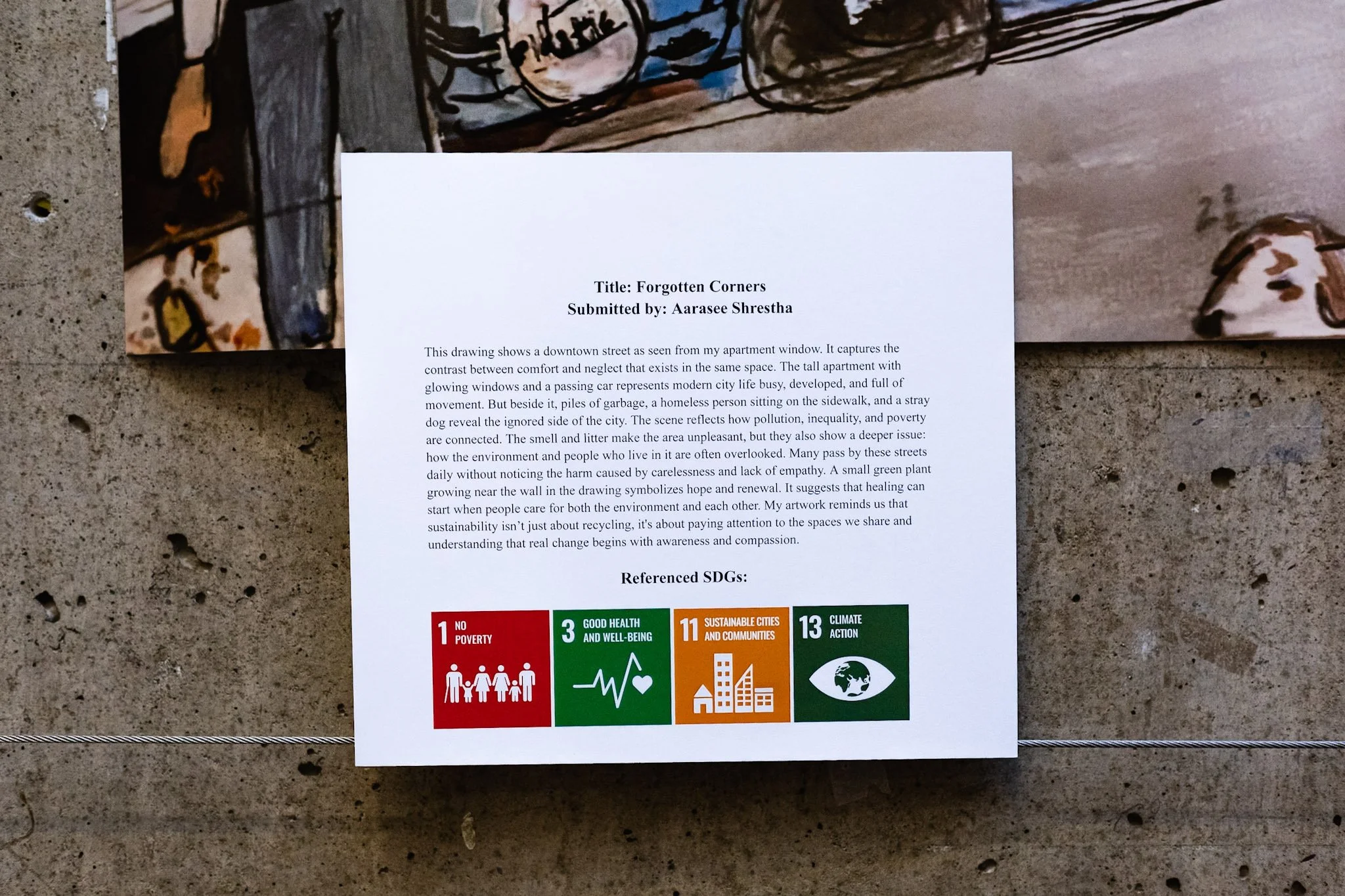
Aarasee Shrestha’s write-up on how her submission compliments the UN SDG’s, referencing their importance. (Photo credits: Neil Patel)
Connecting this event to SDGs was imperative for the organizers as the bulk of sustainability initiatives rely on these goals as a very important framework that guides the way of thinking, and the decisions being made around sustainability. Since the SDGS are already widely used and familiar, most students were able to connect to them easily.That allowed for the event to draw students across all disciplines like health science, management and neuroscience.
As I closely went through all the pieces I realized that many students tied their stories to where they came from, across Canada and the world with students from the Phillipines, Japan, and Puerto Rico. It was important for Osti to showcase the diversity at UTSC and inspire more students to connect to environmental challenges that they encounter in their day to day lives.
For the UTSC community this event provided a space for connection. Passionate discussions carry a vulnerability that is pure and I found that students, whether participants or stopping by, shared in conversation with a curiosity and openness that felt so special. Participants felt that this event gave them a chance to reflect, research and connect deeply with the spaces around them.
For Ace Tabisaura, one of the participants, his photograph showcasing the frequent floods in the Philippines and its severity became such a special project for him.
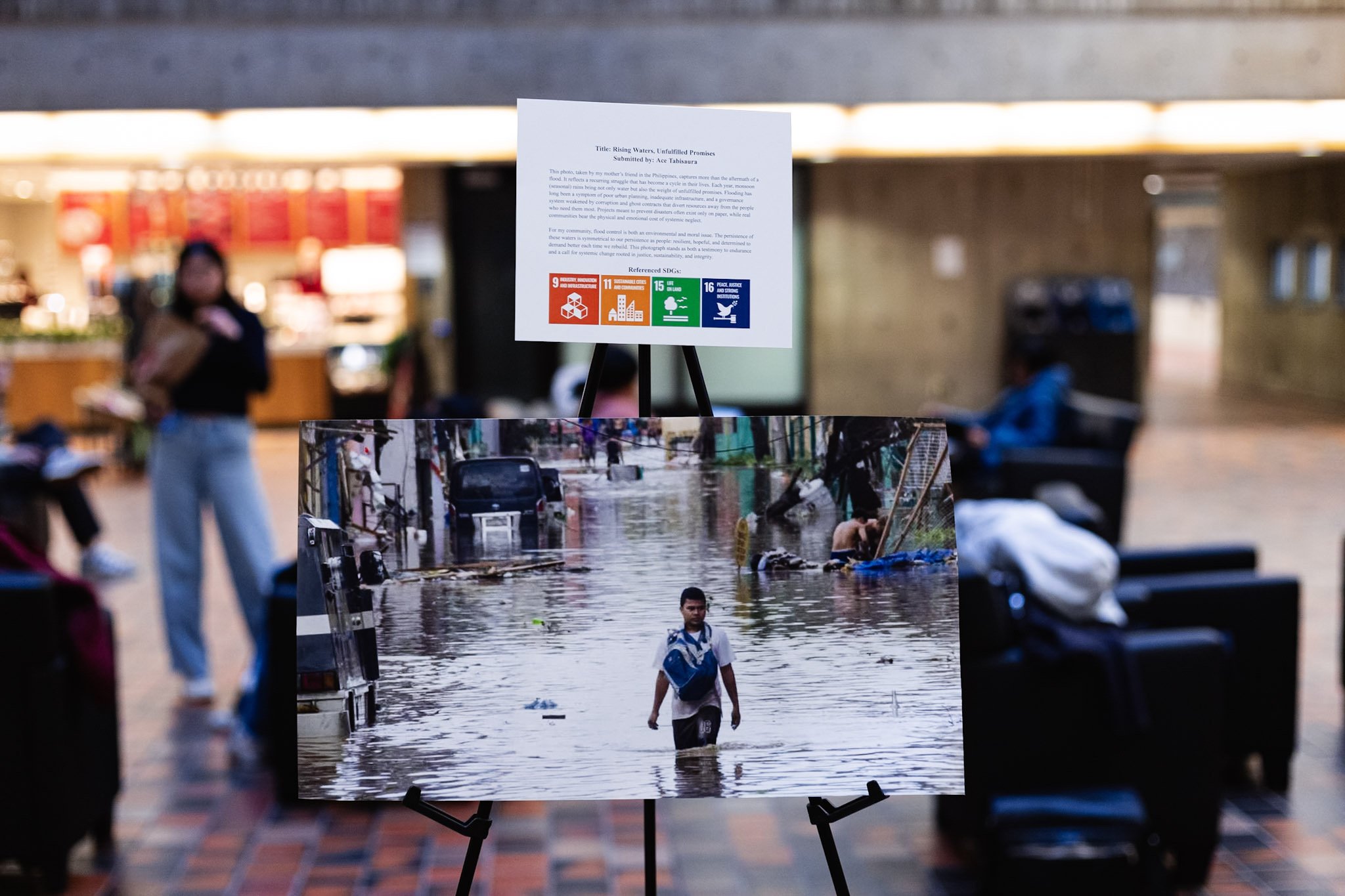
Ace Tabisaura’s submission to the Eco-lens Exhibition. (Photo credits: Neil Patel)
“Science and statistics cannot capture the reality of the situation,” says Tabisaura. He spoke of how connected he felt to his home. This project became a new source of his profound passion towards serving his community.
In a discussion with contestants on how their photos impacted their connection to the SDGs, all of them shared that they developed a new found perspective. “This project has deepened my understanding and given me a glimpse into that internal perspective of not only viewing them from the outside, but what it’s like to be that person in that situation,” said Jawaad Khan.
The audience was filled with students like Khan to Norah Lo who shared how photography allowed them to capture issues present in their own spaces — homelessness, overconsumption, and pollution. The event allowed for UTSC students to slow down, observe, ask questions, and provide solutions. Sustainability felt emotional, not just academic.
The photos were beautifully displayed across the concrete wall at the Meeting Place, creating a captivating chic ambience. The event felt like a purposely curated collection in a museum that made art lovers like myself feel inspired. Students and staff were seen stopping by, engaging in conversation with the photographers and sharing a wonderful meal provided by GCSA.
The Eco-lens Exhibition showed multiple ways to approach sustainability. Taking this discussion outside of classrooms to real life experiences and creativity deliberately used to tell stories.The selected works move up into the upcoming Environmental workbook, and the connections made through this event will carry forward–the important conversations on sustainability development.