What is the space between languages called?
It's as if a language will stretch only so far, until you almost reach the next language, you almost cross the barrier of understanding and find the point at which you can articulate yourself, and then it stops.
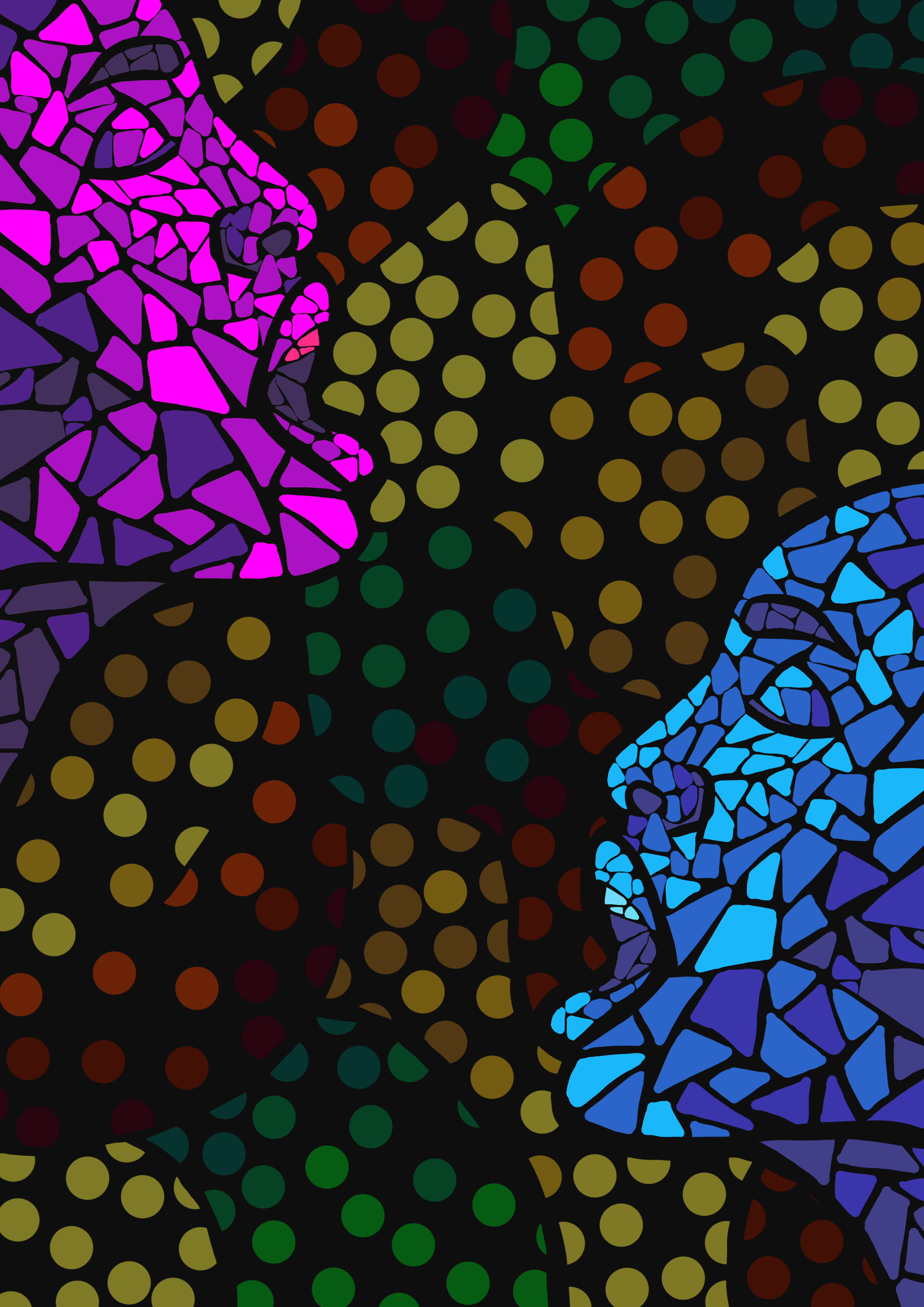
This space was perhaps created by an overwhelming desire to connect, to learn who we are, who I am, to know as much of my history as I can (Illustration By: Hannah Arabella Gabling // The Underground)
I am illiterate.
In my mother-tongue, I am illiterate.
Its literature will never be accessible to me. Its writing will remain foreign to me.
Am I allowed to assert my love for languages I never feel fluent enough in? Does it matter that my craft, the love of my life, remains in English? That I don’t understand the traditions of my other languages? That my family will never understand my poetry?
What is the space between languages called?
Anyone who speaks English more than other languages close to their heart may understand this near-imperceptible, constantly ignored discomfort.
The weird feeling accompanying the realization that every conversation you will ever have with a grandparent will be rudimentary, disrupted by a barrier of understanding.
The way the air shifts when you turn to a parent, “convention…convention…how do I define convention…”, or when they have to struggle to define a word for you. At that moment, they feel so far away, so hard to reach. Further still when a word is misunderstood to be hurtful. No, that's not what that means!
It's as if a language will stretch only so far, until you almost reach the next language, you almost cross the barrier of understanding and find the point at which you can articulate yourself, and then it stops. One language just doesn’t meet the other one in the middle. And you hang in that space in-between when you don’t know what to say…or how to say it.
That space feels like betrayal. It feels like guilt. Shouldn’t I be able to cross? Shouldn’t I be able to say what I need to say all the same? We who are a mesh of different places and different people, we occupy that space frequently. We who speak different words to different people in different communities. We come back to this in-between void every now and then.
But is it really so bleak?
Today is a good day. I’m not in the middle today. Today I inhabit a space of love, where the language of my family, the language of my nation where I don’t live, and the language of my nation where I’ve always lived are not far apart.
I see better, standing above the space of disagreement, how that uncomfortable space isn’t my fault. Do I not know someone who knows how to read and write in their native tongue just as they do in English, who still falls into the gap sometimes?
This space was perhaps created by an overwhelming desire to connect, to learn who we are, who I am, to know as much of my history as I can. Every story I can hear from my grandfather, every word I can learn from my dad, every old photograph where my family does something relatable, every hug, every laugh, every family gathering, every connection with anybody from any community I can call my own, even if there are multiple, bridges that gap bit by bit.
Every book that tells the story of my people, that puts to the forefront bits of my identity which feel ancient and hard to reach, make that gap feel smaller. It doesn’t matter if I need to access those stories in translation, told just as beautifully in different words, they still work to patch the gap between the multiple identities I’ve inherited alongside my skin.
Because we who are mosaics of differences can have gaps bridged by love.