Invisible dirt
I used to think purity meant perfection; now I think it just means trying to come back.
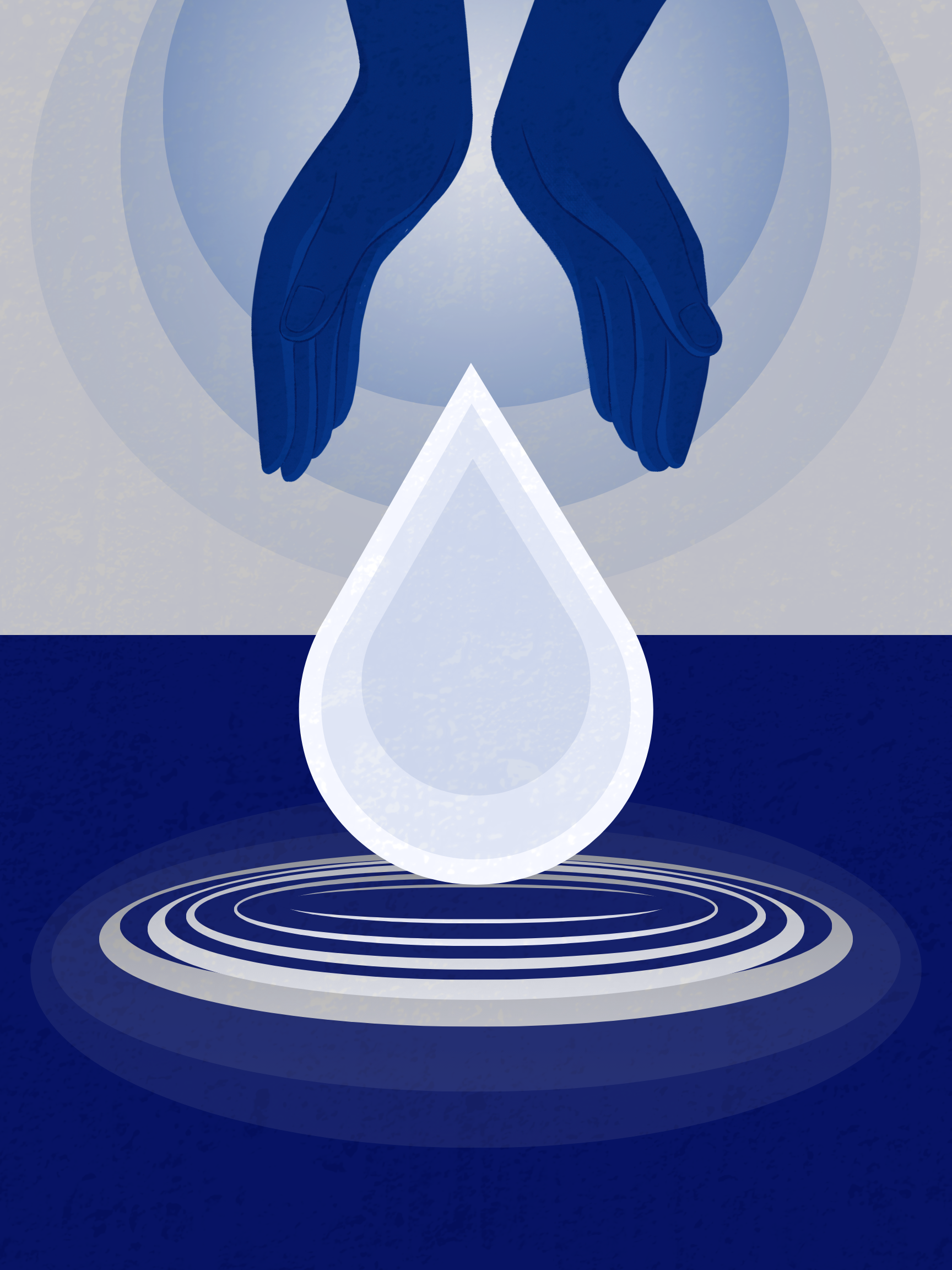
Every step reminds me that returning to God isn’t about being spotless. It’s about showing up, even if I don’t feel ready. . (Illustration By: Hannah Arabella Gabling // The Underground)
There’s a ritual in Islam called wudu (pronounced “woo-thoo”), it’s a kind of spiritual washing. Before we pray, we cleanse hands, mouth, face, arms, head, and feet. Not because we’re dirty, but because prayer is a kind of return, and no one wants to return to God messy (even though he already knows).
I turn the tap on slowly, trying to find the right pressure. If it’s too soft, it barely flows, if it’s too hard, I feel guilty. Wasting water isn’t just wasteful, it’s discouraged. The Prophet Muhammad (peace and blessings be upon him) taught us not to use excess water, even if you were on the banks of a flowing river. So I adjust, until it feels right. Once the stream steadies, I pause. Before anything else, you make niyyah (arabic term for “intention”). It doesn’t have to be spoken out loud; a quiet thought will do. It’s a simple acknowledgment that you’re about to cleanse more than just your skin.
I wash my hands first. They’ve done so much without thinking today– scrolling incessantly, typing, fidgeting, reaching for things they didn’t need, holding onto stress like it was something tangible. In wudu, you’re meant to start from the right hand, then the left, three times each. The water runs over my knuckles and palms, and I think about everything I’ve touched that left a mark I couldn’t see. This is the first unlearning; to let go of what you’ve been holding.
Then I move on to the mouth, to cleanse what’s been spoken, but also to make room for what hasn’t. The remembrance of God that never left my tongue. The kindnesses I meant to give but didn’t. The water swirls it all away– the gossip, the impatience, the words I wish I had swallowed. It’s a strange relief, to wash even the unseen parts of speech. Then my face. It hides so much exhaustion, pride, and pretense. In wudu, it’s not about beauty, it’s about honesty and showing up as you really are. The Prophet (peace be upon him) said that on the Day of Resurrection, his followers will be recognized by the light shining from the parts they used to wash in wudu. I think about that sometimes, how even the smallest acts when repeated daily can leave a kind of radiance that lasts for an eternity.
The next step is the arms. I wash up to the elbows, right first, then left, three times each. These are the limbs that work, that reach, that fail and try again. The water runs down like release, a small mercy after so much striving. At least for a moment, they feel lighter. I turn the tap off, and with damp hands, I run them over my head, my ears and my neck.
Finally, the feet. The ones that have carried me everywhere today, into places I shouldn’t have gone, towards things I thought I wanted. I wash them knowing I’ll walk again tomorrow and probably stumble again too. When I finish, I pause. I stare at the sink. They say wudu is a cleansing but sometimes it feels more like a confession. Like I’m standing in front of something sacred, covered in invisible dirt, hoping the water does more than just wash me.
I dry my hands and watch the last few drops of water trickle into the drain. After all, every drop that falls takes a sin with it. Prayer will come next, but this was already a kind of prayer, or at least soft rehearsal for coming home. Every step reminds me that returning to God isn’t about being spotless. It’s about showing up, even if I don’t feel ready. But maybe showing up was the real apology all along.