The sound of waiting
What does it mean to sit quietly while someone else determines the course of your life?
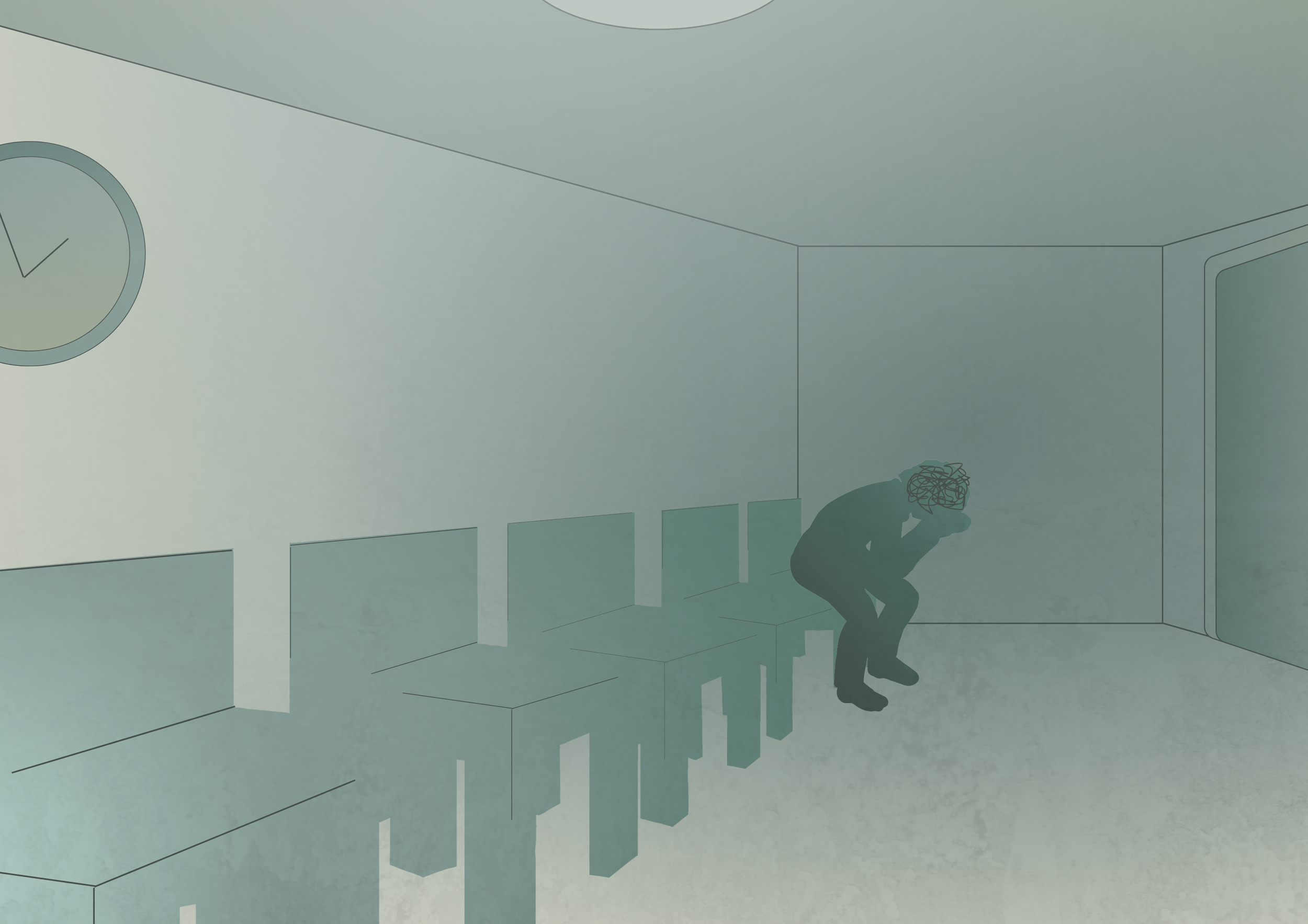
Waiting rooms strip people down to their most vulnerable selves. No matter how carefully we construct our lives. (Illustration By: Hannah Arabella Gabling // The Underground)
While on the outside, life continues in its ordinary rhythm, inside a waiting room, time seems to loosen from its usual structure. Minutes feel unnaturally long while strangers sit shoulder to shoulder pretending not to notice the fear radiating off of one another. It is one of the only places where people are forced to sit face to face with their own helplessness for an extended period of time.
Growing up with a parent battling cancer, I associated waiting rooms with hospitals; to patients with paper wristbands, rows of pamphlets neatly arranged on coffee tables, and workers in light blue scrubs moving in and out of heavy double doors. Later, I began to realize how many forms waiting rooms can take. Outside examination halls, where students stare at the floor rehearsing information they already know. Outside interview offices, where futures briefly condense into résumés and handshakes. Inside immigration buildings, where entire families sit beneath flickering lights while strangers decide whether they may remain in the only home their children have ever known.
We are taught that if we work hard enough, choose carefully enough, pray sincerely enough, that life will unfold according to some understandable logic. But waiting rooms quietly dismantle that belief, and remind us that there are moments when effort can go no further. No amount of preparation grants access to the decision being made elsewhere.
Some carry lighter griefs; examination halls and interview offices may alter the direction of a life temporarily, but there are often backup plans if things go wrong. Others, like immigration offices, refugee processing centers, and courtrooms, are spaces filled not only with anxiety, but with the unbearable awareness that the outcome may alter the trajectory of entire bloodlines. How frightening it is that a family’s sense of home, safety, and belonging can suddenly narrow into a stamp, a signature, and a stranger’s decision.
That is when waiting becomes surrender, not in the sense of giving up, but in the acceptance that there are limits to human control. Sometimes the future arrives not through the choices we make for ourselves, but the choices made about us. And perhaps that is why waiting rooms feel so profoundly human.
I remember sitting in that hospital waiting room while my mother disappeared behind a set of heavy doors for yet another cancer screening. My grandpa sat beside me pretending to read a magazine, though he hadn’t turned a page in nearly twenty minutes. Every few minutes, a nurse would emerge and call out a name that did not belong to us. I remember staring at those doors thinking how strange it was that something so important could be happening on the other side of the waiting room while I remained completely powerless to reach it.
Waiting rooms strip people down to their most vulnerable selves. No matter how carefully we construct our lives, there will always be moments where we are forced to release them into hands other than our own, and in those moments, all that remains is the fragile hope that when the door finally opens, the life waiting on the other side is still recognizable as your own.